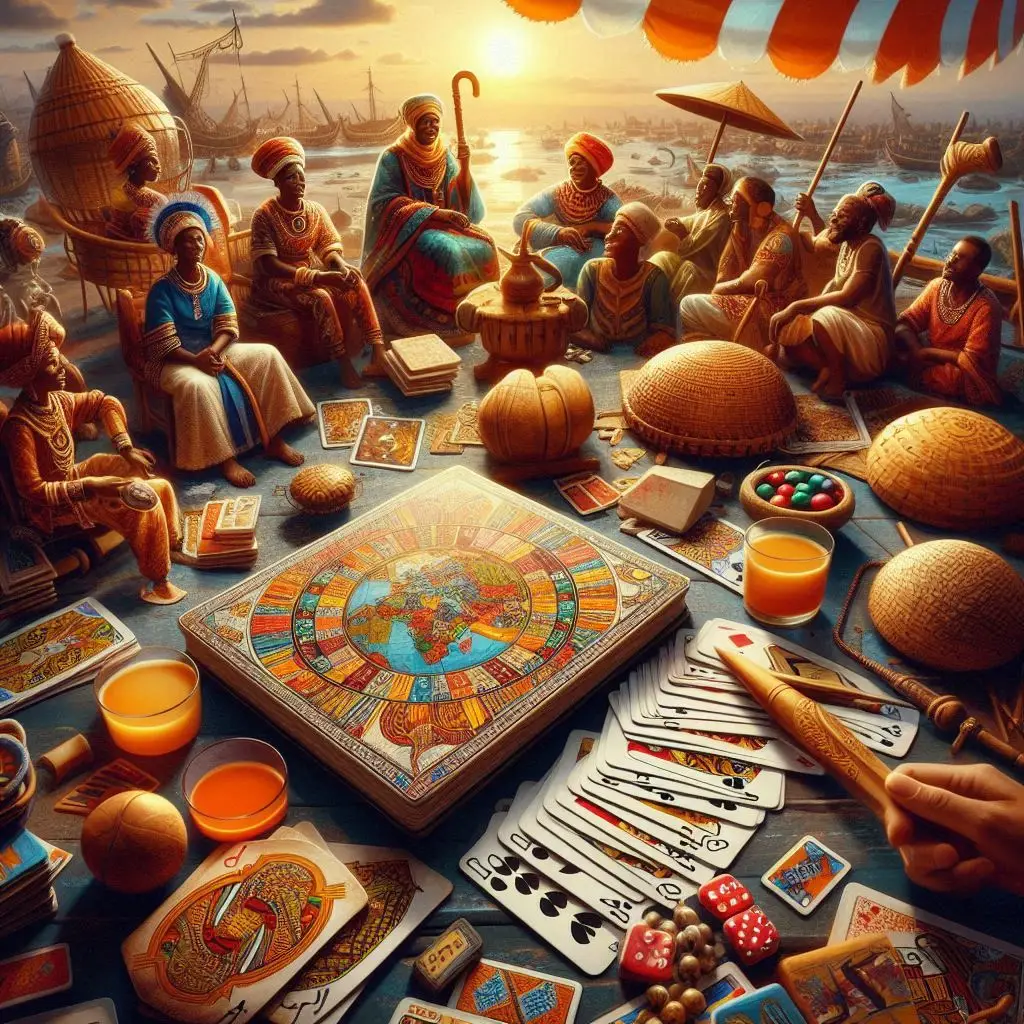
heraclitusoncovid19.com – Across the African continent, games have always been more than simple entertainment. They are tools for storytelling, social bonding, teaching values, and preserving history. Card games, in particular, hold a special place in many African communities, blending imported decks with local traditions, rhythms, and cultural meanings. When we explore popular African card games and their cultural context, we uncover a living heritage shaped by trade routes, colonial encounters, oral traditions, and communal life. Many of these games echo the spirit of ancient card games, where play, culture, and identity were deeply intertwined.
Games as Cultural Expressions in Africa
In African societies, games often serve social purposes beyond winning or losing. Card games are played during family gatherings, festivals, market downtime, and evenings after communal work. They encourage conversation, negotiation, humor, and mutual respect.
Unlike modern competitive gaming, African card play traditionally emphasizes:
-
Community over individual glory
-
Observation and memory
-
Respect for elders and experienced players
-
Storytelling through play
These values shape how games are learned and passed down—from elders to youth, often without written rules.
The Arrival of Cards in Africa
Playing cards arrived in Africa through multiple channels:
-
Arab trade networks across North and East Africa
-
European colonial influence
-
Maritime trade routes connecting Africa with Asia
Over time, African communities adapted these decks, creating unique rules, names, and playing styles. This adaptation mirrors how ancient card games evolved globally—absorbing local culture while retaining a shared structural foundation.
Popular African Card Games and Their Cultural Context
Below are some of the most widely played card games across Africa, along with their cultural significance.
Whist Variations (East & Southern Africa)
Whist, originally a European trick-taking game, became deeply rooted in countries like Kenya, Uganda, Tanzania, and South Africa. Local versions often modify scoring and partnership rules.
Cultural context:
-
Commonly played in social clubs and community halls
-
Encourages teamwork and silent communication
-
Often associated with elders and long-standing social groups
Whist games frequently double as social gatherings where news, advice, and humor are exchanged.
Basra and Pasra (North Africa)
In Egypt, Sudan, and parts of North Africa, Basra-style games are extremely popular. While similar versions exist in the Middle East, African Basra emphasizes speed, calculation, and table awareness.
Cultural context:
-
Played in cafés and family homes
-
Encourages mental arithmetic and foresight
-
Often accompanied by tea, conversation, and debate
These games showcase how card play fits seamlessly into everyday social life.
Sueca and Escoba (Lusophone & Francophone Africa)
In countries influenced by Portuguese and Spanish traditions—such as Cape Verde and Mozambique—games like Sueca and Escoba remain popular.
Cultural context:
-
Played during holidays and family events
-
Emphasizes memory and long-term planning
-
Reinforces communal participation rather than solo play
These games highlight Africa’s historical links with Europe while maintaining local flavor.
Crazy Eights & Mau Mau (Pan-African Popularity)
Mau Mau, closely related to Crazy Eights, is one of the most widespread card games across Africa.
Why Mau Mau is so popular:
-
Simple rules
-
Easy to adapt
-
Fast-paced and social
Cultural context:
-
Often played by children and teenagers
-
Encourages rule creativity (house rules vary widely)
-
Builds negotiation and adaptability skills
Mau Mau’s flexibility reflects African oral tradition, where rules evolve through consensus rather than written law.
Casino (West & North Africa)
Casino, a capture-based card game, is widely played in countries like Nigeria, Ghana, Tunisia, and Morocco.
Cultural context:
-
Rewards calculation and timing
-
Often played competitively in small groups
-
Encourages calm, deliberate decision-making
Casino is frequently taught by older family members, reinforcing intergenerational learning.
Rummy Variations (Urban Africa)
Rummy and its many variants are especially popular in urban centers across Africa.
Cultural context:
-
Played during long evenings
-
Encourages strategic thinking and patience
-
Often paired with storytelling and shared meals
Rummy’s adaptability has made it a staple in mixed-age gatherings.
Cards, Oral Tradition, and Learning
One defining feature of African card games is how they are learned. Unlike formal rulebooks, most players learn through:
-
Observation
-
Correction during play
-
Stories explaining why certain moves matter
This oral transmission connects card games to ancient card games, where learning was experiential rather than instructional. Mistakes become lessons, and gameplay becomes a shared narrative.
Symbolism and Social Hierarchy
In many African communities, card games subtly reinforce social structure:
-
Elders often lead or judge disputes
-
Skilled players gain informal respect
-
Young players learn patience and discipline
Winning loudly is discouraged; humility is valued. This cultural etiquette distinguishes African card play from purely competitive gaming cultures.
Card Games as Tools for Mental Training
African card games sharpen important cognitive skills:
-
Memory (tracking played cards)
-
Arithmetic (sums, captures, scoring)
-
Probability (anticipating opponents’ hands)
-
Emotional control
For many children, card games serve as informal education—building math and logic skills without classrooms.
Modern Evolution and Digital Preservation
Today, African card games are adapting to modern platforms:
-
Mobile apps
-
Online multiplayer rooms
-
Social media communities
Digital spaces help preserve regional variations that might otherwise fade. Younger generations now learn games through apps, videos, and shared online rules—continuing the tradition in new forms.
Yet even in digital versions, the cultural spirit remains: playful rivalry, conversation, and community.
Connections to Ancient Card Games
When studying popular African card games and their cultural context, strong parallels appear with ancient card games from Asia and the Middle East:
-
Emphasis on community
-
Flexible rules
-
Oral transmission
-
Symbolic meaning beyond mechanics
These similarities suggest that card games globally evolved as cultural tools, not just entertainment devices.
Why African Card Games Matter Today
African card games are not relics of the past. They are:
-
Living traditions
-
Social connectors
-
Educational tools
-
Cultural expressions
They teach us that games don’t need complex components to be meaningful. A simple deck, shared among people, can preserve history, teach values, and strengthen bonds.
Final Thoughts
Exploring popular African card games and their cultural context reveals a rich tapestry of history, adaptation, and communal life. From Mau Mau’s playful chaos to Whist’s quiet partnerships, these games reflect Africa’s diversity and resilience. Rooted in traditions similar to ancient card games, African card play reminds us that the heart of gaming lies not in winning, but in connection.
Shuffle the deck, sit together, and play—not just to pass time, but to share culture, memory, and identity across generations.